Right to Rent Checks Explained for UK Landlords
Right to Rent checks are a legal requirement for all private landlords in England.
Before renting out a property, landlords must verify that every adult tenant has the legal right to live in the UK and rent residential accommodation.
These checks are a key part of UK property compliance and apply to all tenants aged 18 or over, regardless of nationality.
This guide explains how Right to Rent checks work, what documents are required, and how landlords can stay compliant.
What Are Right to Rent Checks?
Right to Rent checks are identity and immigration status checks that landlords must complete before a tenancy begins.
Their purpose is to confirm that tenants have the legal right to rent property in the UK.
These requirements apply to:
- Private landlords
- Letting agents
- Property managers
👉 Official GOV.UK guidance: https://www.gov.uk/right-to-rent-checks
Why Right to Rent Checks Matter
Failing to carry out correct checks can lead to serious consequences for landlords.
These include:
- Civil penalties and fines
- Legal enforcement action
- Tenancy disputes
- Reputational damage
For landlords with multiple properties, poor compliance management can quickly become a major risk.
When Must Right to Rent Checks Be Completed?
Landlords must complete Right to Rent checks before the tenancy starts.
This includes:
- Before tenants move in
- Before signing the tenancy agreement
- Before handing over keys
Completing checks after move-in is not compliant.
What Documents Are Accepted?
Landlords must verify tenant identity using approved documents or online systems.
Accepted documents include:
- Valid passport
- Biometric Residence Permit (BRP)
- Immigration status documents
- Online share code (for digital checks)
👉 Official document list: https://www.gov.uk/prove-right-to-rent

How Online Right to Rent Checks Work
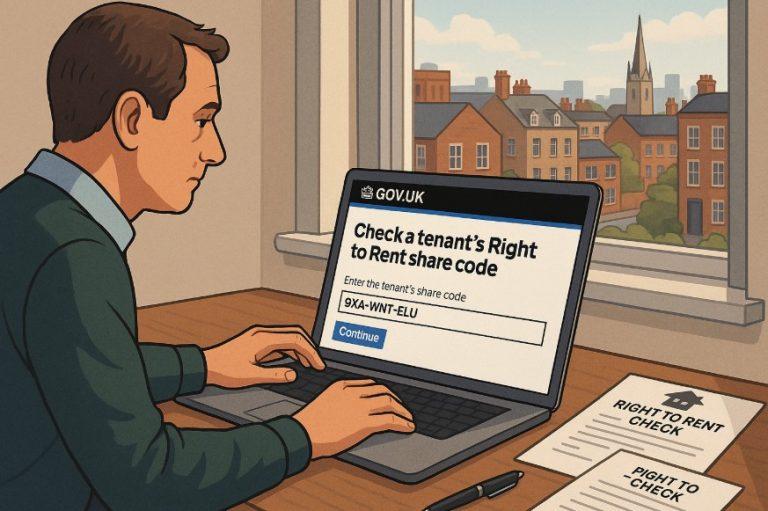
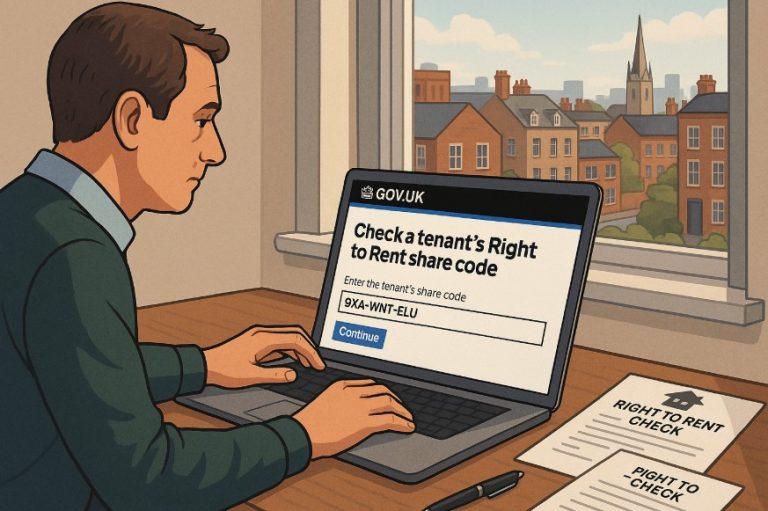
The UK government allows landlords to complete checks digitally using a share code provided by the tenant.
This process allows landlords to:
- Verify immigration status online
- Reduce paperwork
- Improve accuracy and compliance
👉 Online checking service: https://www.gov.uk/view-right-to-rent
What Records Must Landlords Keep?
Landlords are legally required to keep evidence of all Right to Rent checks.
You should retain:
- Copies of identity documents
- Dates checks were completed
- Results of online verification
- Follow-up check reminders (if applicable)
Good record keeping is essential in case of audits or compliance checks.
Follow-Up Right to Rent Checks
Some tenants have time-limited permission to stay in the UK.
In these cases, landlords must complete follow-up checks before the permission expires.
Failing to track expiry dates can result in non-compliance even if the original check was valid.
Common Right to Rent Mistakes
Many landlords unintentionally make compliance errors such as:
- Not completing checks before move-in
- Missing follow-up deadlines
- Accepting incorrect documents
- Poor record keeping
- Relying on verbal confirmation instead of evidence
Even small mistakes can lead to penalties.
Best Practices for Landlords
To stay compliant and reduce risk:
- Complete checks before tenancy starts
- Keep all records organised and digital
- Track expiry dates carefully
- Ensure all adult tenants are checked
- Follow a consistent process
- Stay updated with GOV.UK guidance
How Digital Tools Help Landlords Stay Compliant
As portfolios grow, manual compliance becomes harder to manage.
Digital property management tools can help landlords:
- Store tenant documents securely
- Track compliance deadlines
- Reduce admin workload
- Avoid missed follow-up checks
- Stay organised across multiple properties
How 360Rent Helps Landlords Stay Organised
360Rent helps landlords manage property information, tenant records, and compliance tasks in one place.
It is designed to reduce administrative stress and improve organisation for landlords managing one or multiple properties.
👉 Learn more about 360Rent: https://360rent.co.uk
Final Thoughts
Right to Rent checks are a legal requirement for all UK landlords and an essential part of property compliance.
While the process can feel complex, having a structured system makes it much easier to manage.
By staying organised and using digital tools, landlords can reduce risk, avoid penalties, and operate more efficiently.w, digital systems and structured workflows are becoming increasingly important for modern property management.