Your Property Doesn't Need Managing. Your Information Does.
When people think about property management, they usually picture collecting rent, arranging repairs or finding new tenants.
But that's not where most landlords lose their time.
The real challenge isn't managing a property.
It's managing the information that comes with it.
Whether you own one rental property or a growing portfolio, every tenancy generates an incredible amount of information. Contracts, compliance certificates, maintenance records, inspection reports, tenant communication, invoices, reminders and payment histories all become part of the story of that property.
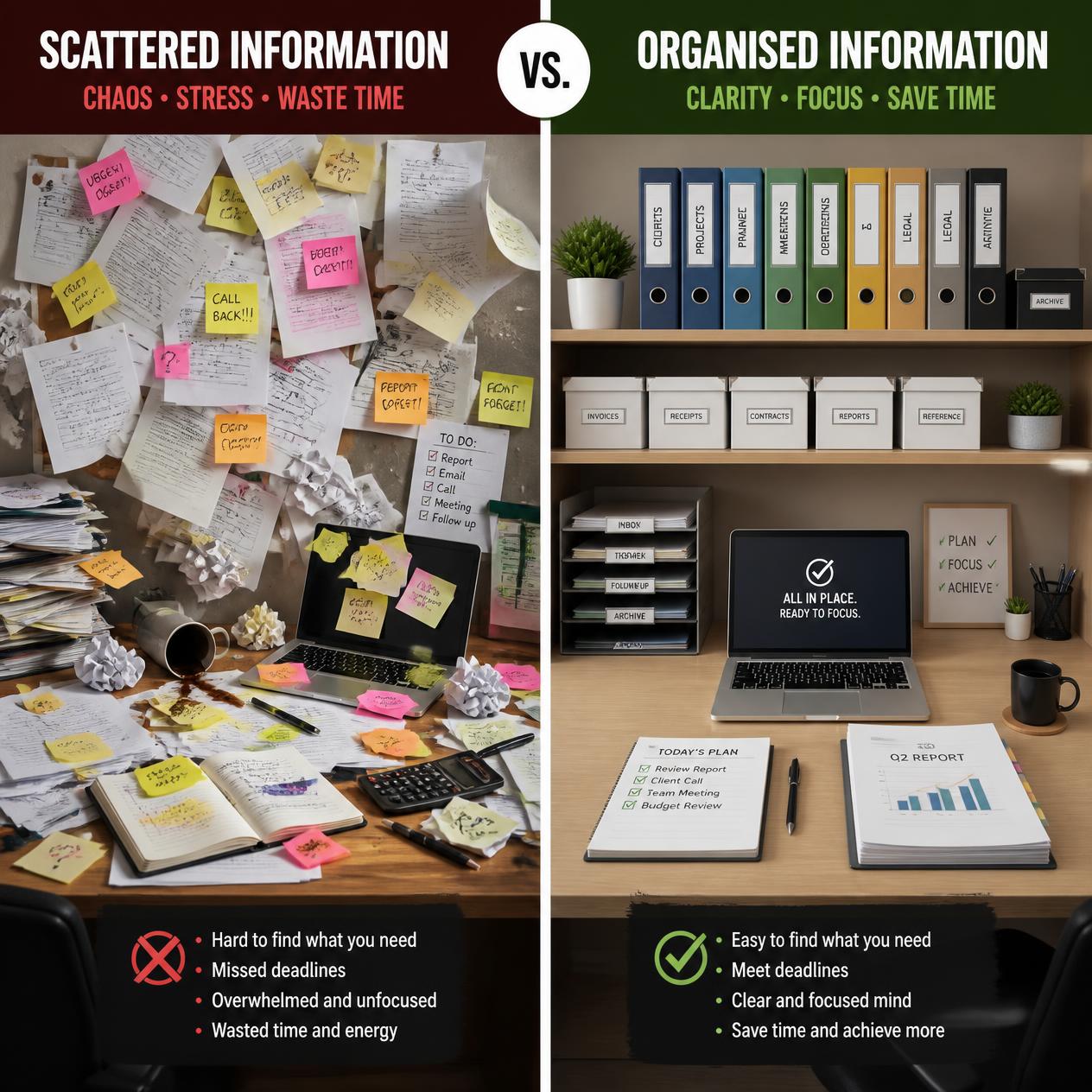
The problem is that most landlords keep this information scattered across multiple platforms, making even simple tasks more time-consuming than they need to be.
Every Successful Business Manages Its Information
Imagine running a business where customer records were stored in five different systems.
One employee keeps notes in a spreadsheet.
Another stores contracts in emails.
Invoices are saved in a cloud folder.
Appointments are tracked in a personal calendar.
Customer conversations happen through text messages.
It wouldn't take long before mistakes started to happen.
Now think about a doctor's surgery.
Patient records aren't stored in random folders across multiple computers. Every consultation, prescription and appointment forms part of one complete record because healthcare relies on accurate, organised information.
Accountants work in exactly the same way.
Every invoice, receipt and transaction contributes to a complete financial picture. If financial records were scattered across emails, paper files and messaging apps, preparing accounts would become a nightmare.
Every professional industry understands one simple principle:
Good decisions come from organised information.
So why should property management be any different?
Landlords Are Managing Businesses
Many landlords don't think of themselves as business owners.
But that's exactly what they are.
Whether you own one rental property or twenty, you're responsible for valuable assets, legal obligations, financial records and ongoing customer relationships with your tenants.
Each property generates information every single month.
- Tenancy agreements
- Rent payment records
- Maintenance requests
- Contractor invoices
- Gas Safety Certificates
- Electrical Installation Condition Reports (EICRs)
- EPC certificates
- Property inspection reports
- Deposit information
- Tenant communication
- Compliance reminders
None of these are optional.
Together, they form the operational history of your property.
The Hidden Cost of Disorganised Information
The biggest expense isn't always financial.
It's time.
How many times have you found yourself asking:
- Where did I save that certificate?
- Which contractor repaired the boiler?
- Has this tenant paid their rent?
- When does the Gas Safety Certificate expire?
- Did I send that document?
- Which email was that conversation in?
Each question may only take a few minutes to answer.
But over the course of a year, those minutes quickly become hours.
Not because property management is difficult.
Because finding information is.
Information Creates Confidence
When everything relating to a property is organised, landlords make better decisions.
Instead of reacting to problems, they can plan ahead.
Instead of searching for documents, they can access them instantly.
Instead of worrying about compliance deadlines, they receive reminders before they become an issue.
Organisation doesn't just save time.
It creates confidence.
Why This Matters More Than Ever
The rental sector continues to evolve, with increasing compliance requirements and higher expectations from both tenants and regulators.
Good record keeping is no longer just best practice.
It's becoming essential.
Whether it's responding to a maintenance issue, preparing for an inspection or demonstrating compliance, landlords who keep accurate records are always in a stronger position.
The more organised your information, the easier it becomes to manage your property professionally.
Stop Managing Files. Start Managing Properties.
Technology has transformed almost every industry.
Businesses use CRM systems to manage customer relationships.
Doctors use digital patient records.
Accountants use cloud accounting software.
Yet many landlords are still relying on spreadsheets, email folders, paper files and messaging apps to manage assets worth hundreds of thousands of pounds.
It doesn't have to be that way.
Imagine opening one property and instantly seeing:
- The tenancy agreement
- Rent payment history
- Compliance certificates
- Maintenance records
- Contractor details
- Inspection reports
- Tenant communication
- Upcoming reminders
Not because you spent hours searching.
Because everything was already where it belonged.
Final Thoughts
Perhaps we've been thinking about property management the wrong way.
The challenge has never really been managing the property itself.
The challenge has always been managing the information behind it.
The landlords who stay organised aren't necessarily the ones with the biggest portfolios or the most experience.
They're the ones who build systems that allow them to find what they need, when they need it.
Because successful property management isn't about remembering everything.
It's about making sure you never have to.
Related Articles
- Landlord Paperwork Checklist: What Documents Should You Keep in 2026?
- The Best Organisational Tools for UK Landlords in 2026: How to Save Time, Stay Compliant and Reduce Stress
- How to Handle Maintenance Issues as a Landlord (UK Guide)
- Landlord Responsibilities Explained (UK Guide 2026)
- UK Rental Property Compliance Checklist (2026 Guide)